
The Padma Bridge Paragraph Collection – Comprehensive Guide for All Classes
Looking for the padma bridge paragraph for your exams? Access high-quality, human-written, and easy-to-memorize versions for SSC, HSC, and competitive exams.


The landscape of Bangladesh’s infrastructure experienced its most monumental shift with the realization of the Padma Multipurpose Bridge. For students, researchers, and job seekers across the nation, this topic has transcended standard general knowledge and become an essential component of academic evaluation. In almost every major public and institutional examination, writing the padma bridge paragraph is highly expected. Whether you are prepping for school finals, the SSC, the HSC, or competitive civil service exams, having a thorough understanding of this structural marvel is absolutely indispensable for securing top marks in English writing modules.
The structural narrative of the bridge goes far beyond traditional engineering; it represents the collective determination, economic sovereignty, and unyielding self-respect of a growing nation. Students frequently search for a well-structured, linguistically precise, and human-written padma bridge paragraph that balances factual data with natural reading flow. To fulfill this academic requirement, this ultimate guide provides multiple specialized versions of the paragraph, carefully calibrated for different academic tiers, vocabulary strengths, and word limit specifications.
In this comprehensive guide, we will analyze the geographical importance, historical background, socio-economic outcomes, and structural metrics of the bridge. By presenting versions customized from basic to highly advanced language structures, we ensure that every student can find the perfect format for their specific exam syllabus. Let us dive deep into the details of this historic mega project and prepare an outstanding response for your upcoming examinations.
What is the Padma Bridge?
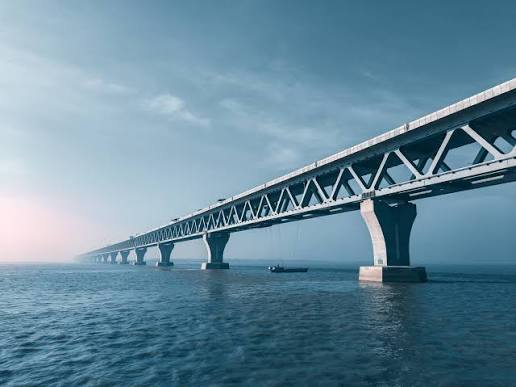
The Padma Bridge is a multipurpose, double-decker, road-rail steel truss composite bridge built across the massive and unpredictable Padma River in Bangladesh. It connects the industrial core of Mawa in Munshiganj to the rural agricultural hub of Janjira in Shariatpur. This geographical link successfully binds the Southwestern region of the country to the central capital city of Dhaka, bringing an end to centuries of structural isolation for twenty-one districts. It is universally recognized as the most complex, hazardous, and expansive structural engineering project ever managed by the Government of Bangladesh.
What makes the Padma Bridge truly unique is that it was executed entirely through domestic capital, without relying on any traditional international loans or development aid. The bridge is structured with an upper deck consisting of a modern four-lane highway dedicated to vehicular movement, and a lower deck housing a single-track broad-gauge railway system. Spanning across a river system known worldwide for its extreme hydraulic forces and depth variability, the project stands out as a world-class structural achievement, proving that Bangladesh has transitioned from a developing economy into an infrastructural powerhouse.
Read Also:-HSC Chemistry MCQ 1st Chapter 50+ Most Important | পরীক্ষার জন্য গুরুত্বপূর্ণ প্রশ্ন ও উত্তর
The Historical Journey and Strategic Autonomy
The historical evolution of the Padma Bridge is a dramatic narrative characterized by early feasibility studies, geopolitical friction, and ultimate financial self-reliance. Initial technical investigations began between 1998 and 1999 under the leadership of the Bangladesh government, leading to a formal project outline in the late 2000s. By 2011, major global financial entities, including the World Bank, the Asian Development Bank, the Japan International Cooperation Agency, and the Islamic Development Bank, signed collaborative credit agreements to finance the project. However, the progression was abruptly halted when the World Bank withdrew its funding based on uncorroborated, politically charged allegations of a corruption conspiracy.
In the wake of this massive financial withdrawal and international skepticism, the Honorable Prime Minister Sheikh Hasina made a historic, definitive declaration that Bangladesh would construct the mega-structure using its own internal national budget. This bold declaration altered the fundamental character of the project, turning it into a battle for national pride and sovereignty. Despite intense pushback from local and international economic critics, the physical work officially began in December 2014 under the execution of the China Railway Major Bridge Engineering Group. After nearly eight years of navigating technical, environmental, and financial obstacles, the bridge opened to the public on June 25, 2022, marking a new era of structural independence.
Engineering Marvel and Technical Specifications
From an engineering perspective, the building of the Padma Bridge required the resolution of some of the most difficult river-management and structural challenges ever encountered in human history. The Padma River possesses an astronomical water discharge rate and a shifting, soft riverbed layer that is second only to the Amazon River in South America. To secure a permanent bridge structure on such unstable terrain, engineers had to design the deepest raked steel tubular driven piles ever created, penetrating down to a historic depth of 122 meters beneath the fluctuating water level.
The core structure measures 6.15 kilometers in length, while its structural deck is 18.10 meters wide. The structural framework consists of 41 immense steel spans, each weighing around 3,200 tons and extending 150 meters in length. These spans are anchored firmly onto 42 massive reinforced concrete pillars. Additionally, the bridge features kilometers of strong river training works, viaducts, connecting approach roads, and complex automated toll plazas at both ends. It is designed to withstand powerful earthquakes, extreme river current velocities, and heavy cargo impact loads, making it a state-of-the-art global reference for hydraulic engineering.
The Padma Bridge Paragraph (Standard Exam Version)
The Padma Bridge stands out as the most spectacular, historic, and revolutionary infrastructural development project in the history of Bangladesh. For students preparing for standardized school and national assessments, mastering the padma bridge paragraph is a vital requirement to excel in English written exams. Geographically, this multipurpose road-rail bridge is constructed across the turbulent and immense Padma River, establishing a permanent structural link between Mawa under Munshiganj and Janjira under Shariatpur. By doing so, it has integrated twenty-one isolated districts in the Southwestern territory with the administrative and commercial capital of Dhaka. The structural dimensions of the main bridge include a total length of 6.15 kilometers and an overall deck width of 18.10 meters. The bridge is engineered as a two-tier steel truss composite structure, presenting a four-lane highway on the upper deck for motor vehicles and a single-track broad-gauge railway line on the lower deck for train transportation. This dual-purpose design makes it a highly complex and celebrated civil engineering asset worldwide. The bridge stands securely on 42 massive reinforced concrete pillars, which support 41 high-strength steel spans, each measuring 150 meters in length. The history behind this project is a profound demonstration of strategic planning, political bravery, and national unity. Initially, international development agencies, led by the World Bank, signed loan agreements to fund the construction.
However, they later suspended their financial programs over unproven, baseless allegations of corruption. Refusing to succumb to global pressure, the Government of Bangladesh took the bold and patriotic decision to self-finance the multi-billion-dollar project using its domestic funds. The construction process started in December 2014, managed by the China Railway Major Bridge Engineering Group. Following eight years of continuous hard work, technological innovation, and immense sacrifices made by local and international experts, the bridge was formally inaugurated on June 25, 2022. The socioeconomic outcomes of the bridge are truly immeasurable. It has completely eliminated the dangerous, hours-long wait times at ferry terminals, allowing motorists to safely cross the river in under ten minutes. This seamless link allows farmers to transport perishable agricultural products to central urban markets instantly, optimizing their profits and reducing waste. Furthermore, economists estimate that the operationalization of the bridge adds a substantial 1.2% to 2% to the national Gross Domestic Product (GDP) on an annual basis, accelerating industrialization and creating massive employment opportunities across the southern plains. In conclusion, the Padma Bridge is not just a structural marvel of steel and concrete; it is the ultimate symbol of Bangladesh’s dignity, economic resilience, and unstoppable journey toward prosperity.
The Padma Bridge Paragraph for SSC Candidates
For students appearing in the Secondary School Certificate (SSC) examinations, writing a well-framed padma bridge paragraph is an important academic requirement to secure top marks in the English paper. The Padma Bridge is the longest, most difficult, and most inspiring mega-structure ever built in Bangladesh, constructed entirely with our own domestic financial resources. The bridge is built over the vast and fast-flowing Padma River, connecting Mawa in Munshiganj with Janjira in Shariatpur. It is structured as a double-decker bridge made of strong steel trusses and concrete. The top floor of the bridge features a modern four-lane highway for cars, buses, and trucks, while the bottom floor contains a single railway track for passenger and cargo trains. The main bridge has a total length of 6.15 kilometers and a width of 18.10 meters. It rests on 42 huge concrete pillars, and there are 41 large steel spans placed over these pillars. Building this bridge was an incredibly tough challenge because the water flow and soil conditions of the Padma River are highly unpredictable, making it the second most dangerous river in the world after the Amazon. The history of the bridge took a dramatic turn when the World Bank withdrew its financial support based on false rumors of corruption. Instead of canceling the project, the Government of Bangladesh, under the brave leadership of Prime Minister Sheikh Hasina, decided to build the bridge completely with our own national money. The physical work began in December 2014, and after years of intense labor, the bridge was opened on June 25, 2022. The bridge has brought a wonderful revolution to our national transportation system. In the past, people living in the twenty-one southern districts had to suffer terribly at the ferry ghats, waiting for hours and risking their lives during heavy storms. Now, vehicles can cross the river safely in just ten minutes. This direct connection helps poor farmers sell their vegetables and fruits directly to big cities without any delay, ensuring fair prices. It also helps to open new factories, mills, hospitals, and colleges in the southern parts of the country, creating thousands of jobs for local youth. For an SSC student, this paragraph is highly important because it shows the immense development and growing confidence of modern Bangladesh. To sum up, the Padma Bridge is a lifelong dream come true for millions of citizens, and it stands tall as a brilliant proof of what our country can achieve through unity and dedication.
The Padma Bridge Paragraph for HSC Candidates
In the Higher Secondary Certificate (HSC) academic curriculum, writing an analytical padma bridge paragraph demands an advanced vocabulary, sophisticated sentence structures, and a comprehensive understanding of its macroeconomic and geopolitical significance. The Padma Multipurpose Bridge stands as an supreme architectural triumph and an enduring testament to the economic sovereignty of Bangladesh. Spanning the volatile, deeply scoured, and technologically intimidating currents of the Padma River, this 6.15-kilometer-long engineering masterpiece successfully integrates the traditionally isolated southwestern economic periphery with the thriving central industrial core of the nation. Structurally, it features a double-decker steel-concrete composite truss framework, supporting a high-speed four-lane highway on its upper level and a single-track broad-gauge railway system on its lower tier. The successful positioning of 41 colossal steel spans, each weighing approximately 3,200 tons, onto 42 robust concrete pillars required pioneering construction techniques, including the deepest raked steel tubular driven piling ever executed in global engineering history, reaching an astonishing depth of 122 meters beneath the riverbed. The historical narrative surrounding the bridge is a profound example of national resilience against geopolitical adversity. Following the controversial and uncorroborated withdrawal of the World Bank and other multilateral lenders, Bangladesh faced immense skepticism in international financial circles. Overcoming these intense bottlenecks, the country embarked on an audacious self-funded path, mobilizing over 30,193 crore BDT entirely from internal revenue. This historic paradigm shift demonstrated the fiscal maturity of Bangladesh and its structural capability to execute high-stakes mega projects independently. The construction phase, managed efficiently by the China Railway Major Bridge Engineering Group, commenced in late 2014 and culminated in a grand national inauguration on June 25, 2022. From a macroeconomic perspective, the Padma Bridge acts as a powerful catalyst for balanced regional development. By physically connecting twenty-one southwestern districts, it mitigates spatial economic disparity, optimizes domestic supply chains, and connects major maritime gateways like the Mongla and Payra deep-sea ports directly to Dhaka. Macroeconomic research suggests that the operationalization of this bridge yields an incremental 1.2% to 2% growth to the national Gross Domestic Product (GDP), effectively transforming the agrarian economy of the south into a thriving industrial zone. Socially, it guarantees seamless, unimpeded access to advanced healthcare systems, premier universities, and diverse employment opportunities for millions who were previously marginalized by geography. Furthermore, it incorporates Bangladesh into transnational transit networks, such as the Asian Highway 1 and the Trans-Asian Railway corridor. Ultimately, the Padma Bridge represents the unyielding spirit of the Bangladeshi people, serving as a definitive leap toward achieving the status of a developed nation.
Easy English Paragraph on Padma Bridge (School Level)
The Padma Bridge is the largest and most beautiful bridge in Bangladesh. It is built over the big and powerful Padma River. This bridge connects the southern part of our country directly with the capital city, Dhaka. It is a very important bridge for all our citizens. The bridge has two levels or floors. The top floor is a wide road with four lanes where cars, buses, and big trucks can drive safely. The bottom floor has a railway track where fast trains can travel. The total length of the Padma Bridge is 6.15 kilometers, and its width is 18.10 meters. It stands strong on 42 massive concrete pillars and has 41 heavy steel parts called spans. Before this bridge was made, crossing the wide Padma River was a very hard and scary task for common people. Everyone had to use old ferries, slow launches, or risky speedboats to cross the water. People had to wait for many hours at the river banks, and during heavy rains or storms, all boats stopped working completely. Emergency medical patients faced terrible problems and often died before reaching the big hospitals in Dhaka. Now, thanks to the Padma Bridge, anyone can cross this dangerous river safely and happily in just ten minutes. The most amazing fact is that this bridge was built entirely with Bangladesh’s own money. Our government did not take any loans or financial help from foreign banks. This makes every Bangladeshi citizen feel very proud and strong. The construction work of this dream project started in December 2014 and successfully finished in June 2022. The Honorable Prime Minister Sheikh Hasina inaugurated the bridge on June 25, 2022, and millions of people celebrated this great day together. The Padma Bridge is helping our country’s economy to grow very quickly every day. Farmers can now sell their fresh vegetables, sweet fruits, and fishes directly to the big markets of Dhaka without any delay or extra cost.
Read Also:-Career backup হিসেবে কোন Skill শেখা ভালো? ২০২৬ সালের সেরা গাইডলাইন
Businessmen can easily transport goods and set up new industries, mills, and shops in the southern districts, which creates thousands of new jobs for poor people. It also helps young students travel safely to universities for higher education. Because of all these wonderful things, the Padma Bridge is truly called the “Dream Bridge” of Bangladesh, showing our unity, power, and bright future to the whole world.
Padma Bridge Comprehensive Fact Sheet
For accurate data analysis, examination reference, and general research, it is essential to have access to verified institutional metrics. The following table outlines the complete engineering and administrative facts of the Padma Multipurpose Bridge:
| Engineering & Administrative Parameters | Verified Project Specifications |
|---|---|
| Official Project Name | The Padma Multipurpose Bridge Project (PMBP) |
| Total Structural Length | 6.15 Kilometers (Main Bridge structure) |
| Overall Deck Width | 18.10 Meters (Accommodating a four-lane highway) |
| Total Structural Pillars | 42 Pillars (Reinforced high-density concrete) |
| Total Installed Spans | 41 Spans (Each span running 150 meters in length) |
| Geographical Terminals | Mawa (Munshiganj) to Janjira (Shariatpur) |
| Total Capital Expenditure | Approximately 30,193 Crore BDT (100% Domestic Funding) |
| Official Inauguration Date | June 25, 2022 |
| Structural Architecture Type | Double-decker Steel Truss Composite Structure |
| Highway Deck Capacity | Four-lane high-speed vehicular layout (Upper Tier) |
| Railway Deck Capacity | Single-track broad-gauge system (Lower Tier) |
| Maximum Piling Depth | 122 Meters (Deepest underwater raked piling globally) |
| Primary Construction Contractor | China Railway Major Bridge Engineering Group (MBEC) |
Macroeconomic Transformation of the Southwest
The operationalization of the Padma Bridge has catalyzed an economic renaissance across the twenty-one southwestern districts of Bangladesh. Historically, these districts faced sluggish growth due to the lack of direct transport connectivity with the commercial center of Dhaka. By removing this barrier, the bridge has optimized supply chains and expanded domestic commerce. Perishable agricultural items like fresh fish, vegetables, and rice can now be moved from rural fields to urban markets instantly. This efficiency minimizes post-harvest financial losses, allowing small-scale farmers to demand competitive market prices and improve their financial stability.
Moreover, the bridge links key maritime assets, including the Mongla and Payra sea ports and the Benapole land port, directly with the central capital and the eastern export zone of Chittagong. This network reduces transit times and slashes international logistics expenses for global shipments. The availability of reliable transport has also stimulated industrialization in the south. Dozens of new manufacturing plants, garment factories, and economic processing centers are emerging along the highways. This wave of private investment is generating employment opportunities, transforming the region into an economic powerhouse and expanding the national GDP by 1.2% to 2% annually.
Educational Advancement and Human Resource Development
The education sector in the southern districts has also benefited from this infrastructure project. In the past, talented young scholars from distant towns often had to abandon their dreams of higher education due to travel challenges and the high cost of living in Dhaka. The direct road and rail links now allow students to participate easily in university admissions, attend academic workshops, and access premier educational institutions without leaving their home districts.
Simultaneously, universities and colleges in the southwest are experiencing qualitative growth. Prominent professors, researchers, and educational materials can now travel easily to rural campuses, improving the quality of local education. As students research topics like the padma bridge paragraph or look into complex engineering reports online, they develop an appreciation for national development and civil engineering. This exposure inspires young minds to pursue careers in science, technology, engineering, and mathematics (STEM), creating a skilled workforce capable of driving the nation’s future innovations.
A Monument of National Sovereignty and Resilience
The Padma Bridge has evolved into a landmark of national sovereignty and collective pride for Bangladesh. When international lending groups canceled their financial commitments, it was seen as a setback to the country’s development aspirations. The bold decision to construct the massive bridge entirely with sovereign domestic capital transformed it into an emblem of self-reliance. It showed the global community that Bangladesh can manage complex mega-projects independently, matching global engineering and financial standards.
The technical success of the project highlights the skill of the engineering teams involved. Managing the deep underwater soil shifts of a river as powerful as the Padma required world-class technical solutions. The deep piles and advanced river-training systems demonstrate human ingenuity triumphing over harsh environmental conditions. For every citizen, the bridge is a source of inspiration. It shows that with clear vision, collective courage, and dedication, a nation can overcome structural hurdles and turn its dreams into reality.
Frequently Asked Questions (FAQ)
1. What are the official dimensions of the Padma Bridge?
The main structure of the Padma Bridge measures 6.15 kilometers in length and 18.10 meters in width, accommodating both highway and railway transportation networks.
2. Which specific areas are connected by the Padma Bridge?
The bridge connects Mawa in the Munshiganj district with Janjira in the Shariatpur district, linking the southwest region directly with Dhaka.
3. When was the Padma Bridge officially inaugurated?
The bridge was formally inaugurated by Prime Minister Sheikh Hasina on June 25, 2022, and was opened for commercial vehicular traffic on June 26, 2022.
4. How much did the construction of the Padma Bridge cost?
The total capital expenditure for the project reached approximately 30,193 Crore BDT, funded entirely by the Government of Bangladesh’s internal revenue.
5. Why is the bridge described as a double-decker structure?
It features a dual-tier design: the upper deck contains a four-lane highway for automobiles, and the lower deck houses a single-track broad-gauge railway system.
6. What are the key points to include in ‘the padma bridge paragraph’ for exams?
To score high marks, the paragraph should include details like the bridge’s length (6.15 km), its pillars (42) and spans (41), the self-funded history, the opening date, and its socio-economic impacts on the nation.
7. What contractor was responsible for building the main bridge?
The main structure was constructed by the China Railway Major Bridge Engineering Group (MBEC), a world-renowned civil engineering company.
8. What is the projected macroeconomic impact of the bridge on the national GDP?
Economic models show that the operational bridge stimulates industrial growth and cross-border trade, adding 1.2% to 2% to the national GDP every year.
9. Why did the piling process for the bridge set an engineering record?
Because of the river’s soft and shifting bed, engineers had to drive steel piles to a depth of 122 meters, making it the deepest underwater piling work ever completed.
10. How does the bridge improve the regional supply chain?
It connects major hubs like the Mongla and Payra ports directly to Dhaka, reducing freight travel times from hours to minutes and lowering operational costs.
Concluding Remarks
In summary, the Padma Multipurpose Bridge stands as a landmark achievement in the modern history of Bangladesh. It has successfully resolved a longstanding geographic divide, bringing economic opportunity and social integration to millions in the southwestern districts. For students nationwide, understanding this project and preparing an effective the padma bridge paragraph is an important step toward academic success in English writing modules.
The carefully structured versions of the padma bridge paragraph provided in this guide offer accurate data and balanced language suitable for all academic levels. Students can select the version that matches their exam requirements, note down the technical statistics, and build the confidence needed to excel in their tests. The bridge reflects the progress of Bangladesh, and its story is a valuable addition to any student’s academic preparation.

এই লেখক এখনও কোনো বায়ো দেননি।



Social Integration and Human Welfare
Beyond its economic impact, the Padma Bridge has brought about deep improvements in social integration and human welfare. For generations, traveling across the turbulent river was a stressful and dangerous endeavor. During severe weather, monsoon downpours, and dense winter fog, ferry operations would halt entirely, leaving travelers stranded for days under harsh conditions. The bridge has replaced this hazardous process with a safe, ten-minute crossing, restoring dignity and comfort to travel. Families can now reconnect effortlessly during national celebrations, bridging the cultural gap between urban and rural populations.
The most vital social impact of this bridge is seen in healthcare access. Previously, patients in the southwest requiring urgent specialized medical attention faced life-threatening delays due to slow river transport. Many individuals succumbed to their conditions while waiting at the ferry terminals. With the open highway of the Padma Bridge, modern ambulances can reach advanced hospitals in Dhaka within hours. This rapid access saves thousands of lives daily, uplifting public health safety standards and enhancing the overall quality of life for millions of citizens.